
Last updated November 16, 2026
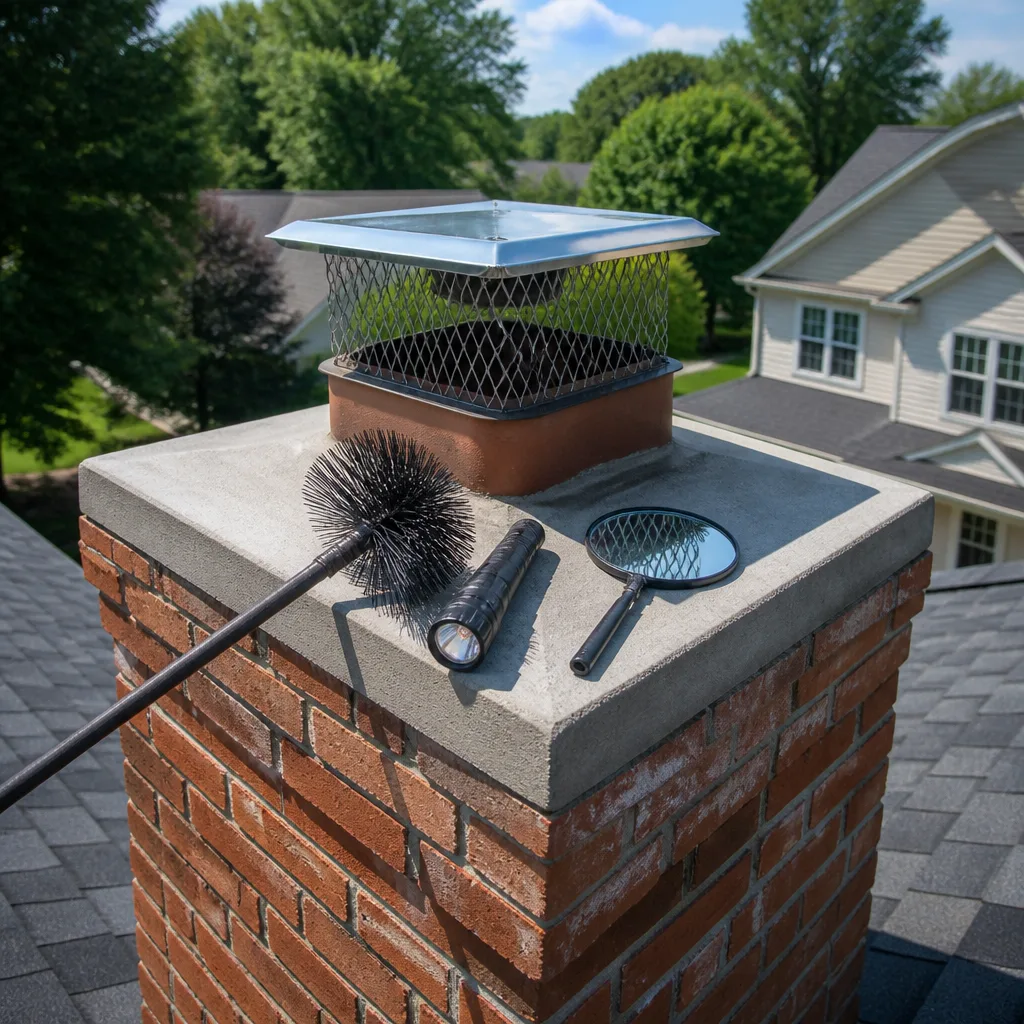 Sweep & inspection
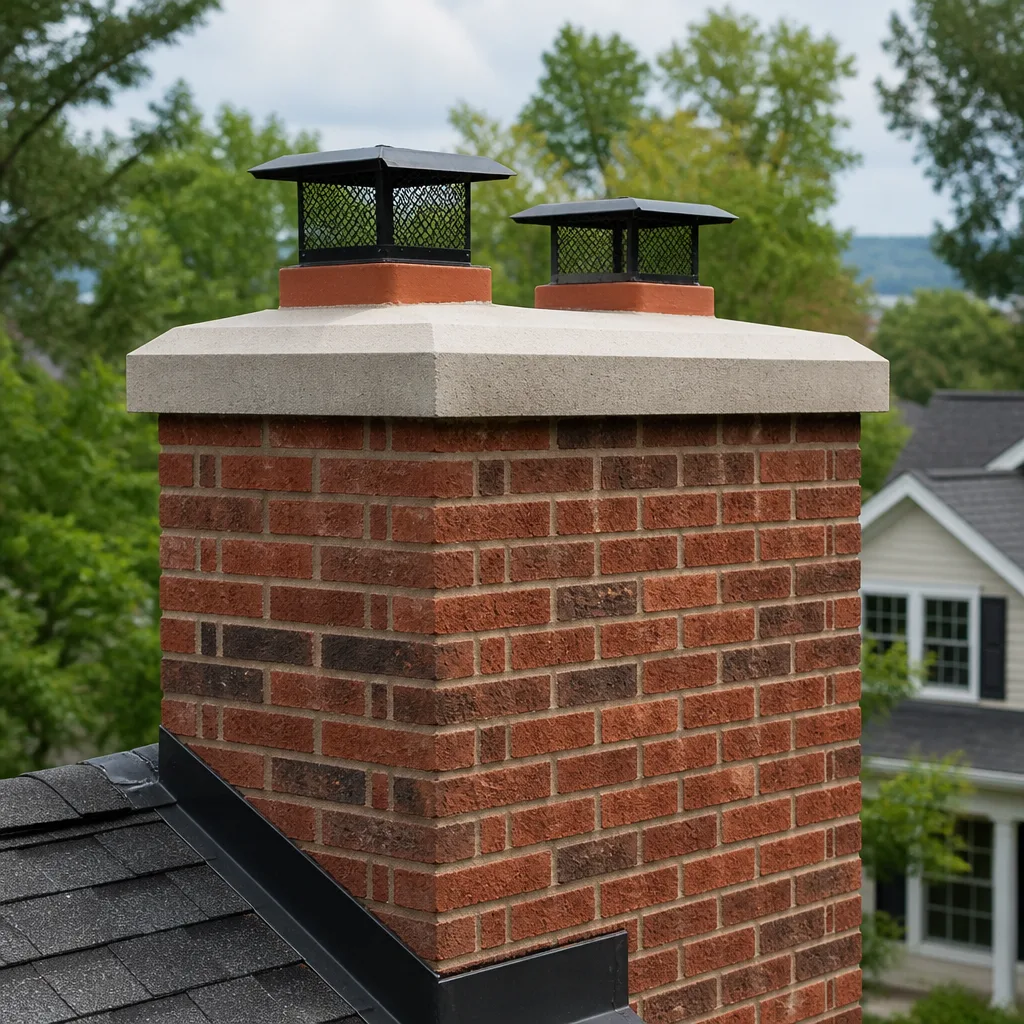 Caps & crowns
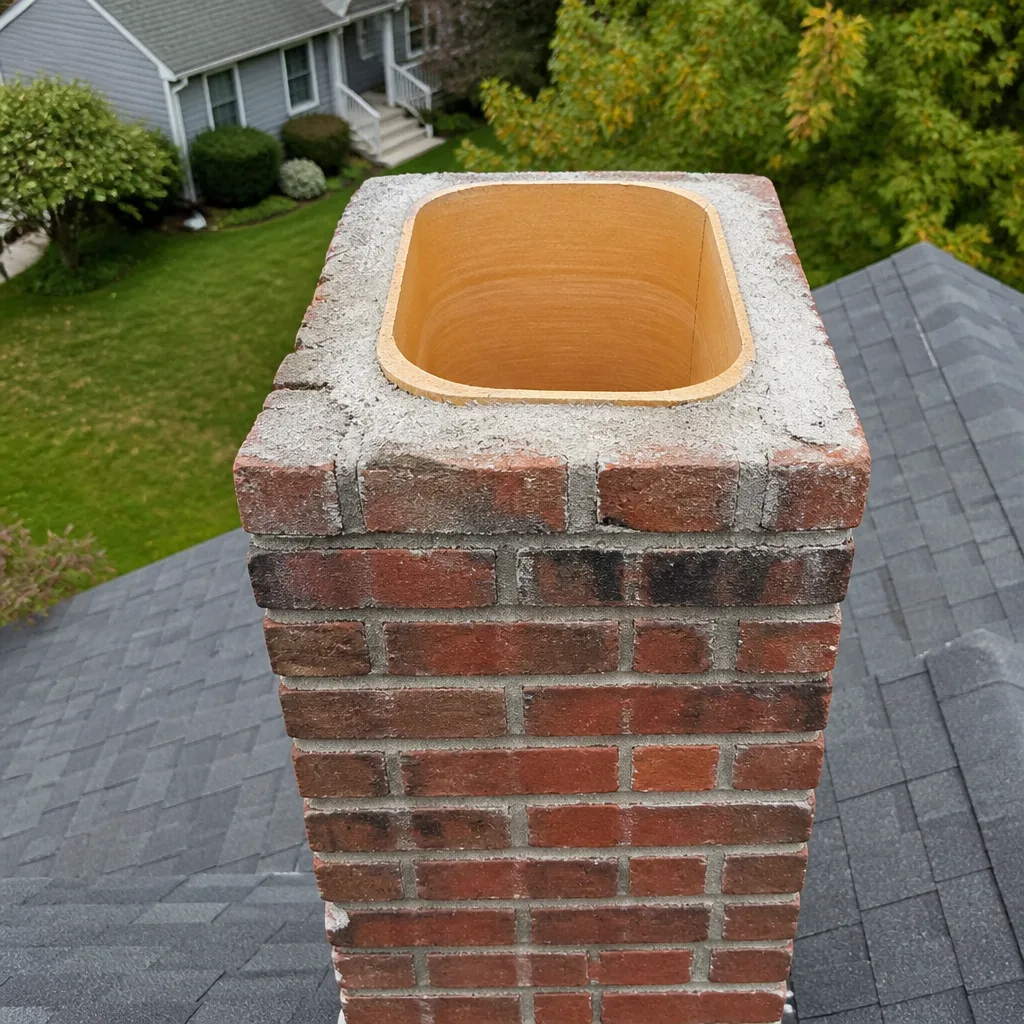 Flue relining
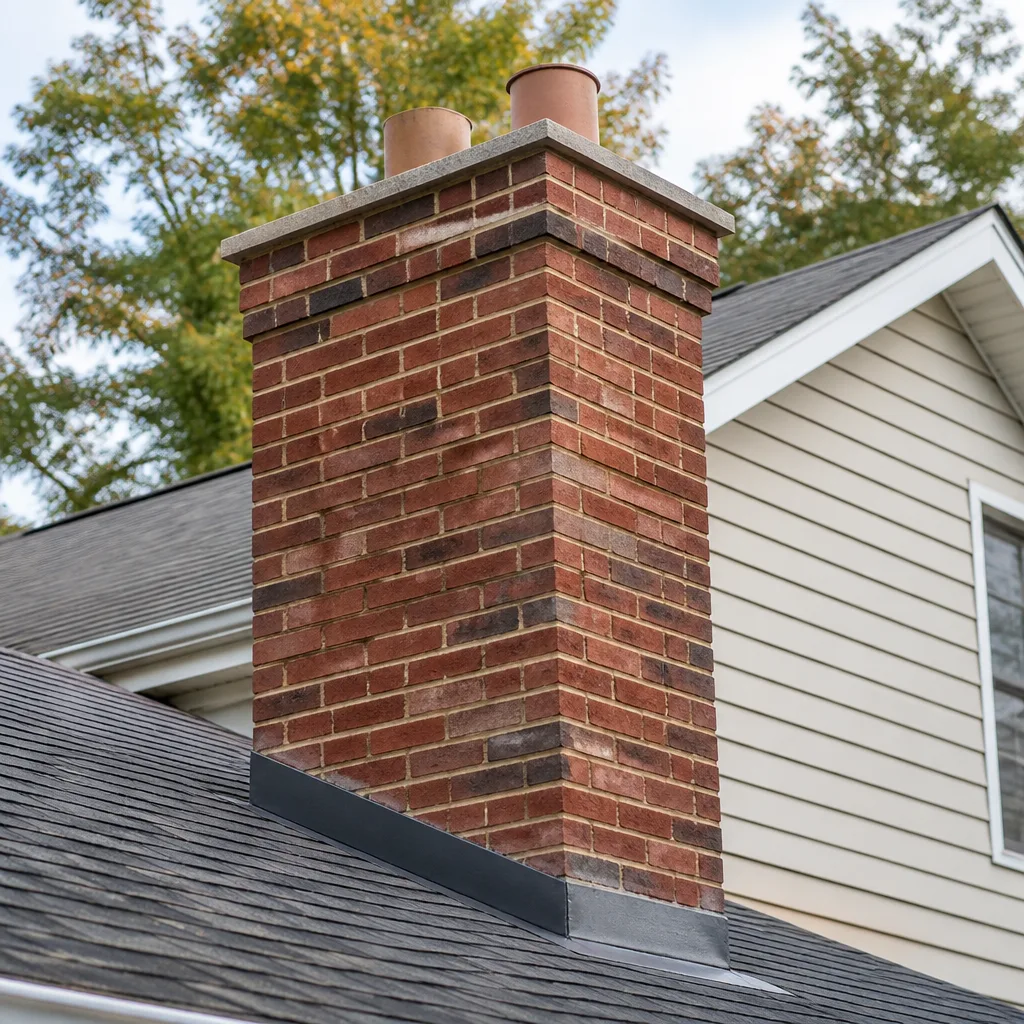 Masonry repair
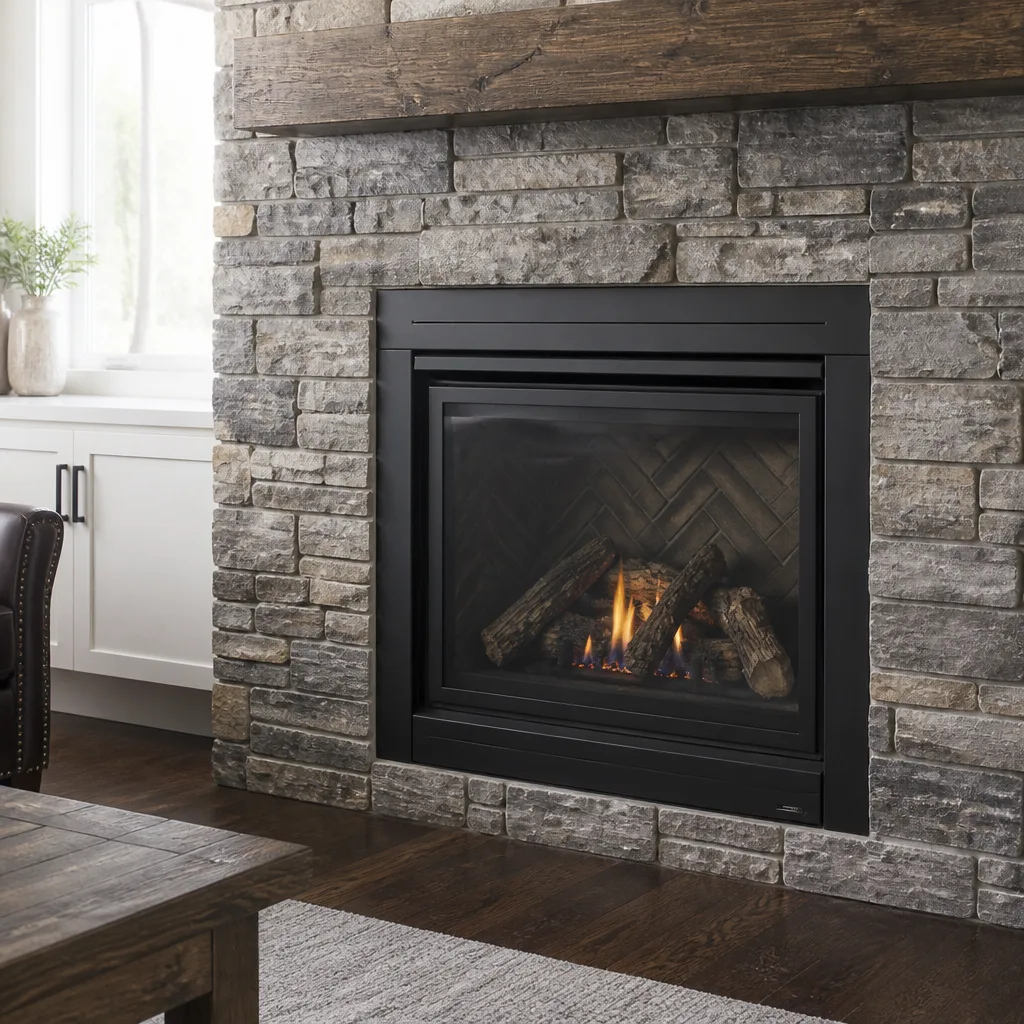 Gas fireplace service
Level 1 sweep and inspection to the NFPA 211 annual standard - flue, crown, cap, and flashing checked and photographed
Chimney sweep logs do not sweep chimneys. They loosen some creosote - which then falls where a brush and vacuum still have to collect it.
Chimney Sweep Maintenance Schedule: What to Do and When
The most common misconception we run into is that a chimney sweep is a once-a-year event you check off and forget. In practice, one annual sweep is the minimum floor, not the whole schedule. A chimney is a living system through the year: creosote builds while you burn, condensation collects while you don’t, and the cap takes weather twelve months a year. What follows is a month-by-month maintenance calendar for an Antioch home, tied to what’s actually happening inside the flue at each point on the calendar – not a generic “get it swept annually” line.
Quick Answer
Chimney sweeping should happen at least once a year, ideally in late summer or early fall before the first fire, and more often (every 50 burns or so) if you burn wood heavily. A full schedule is four touchpoints: a pre-season check in September, a mid-season creosote check in January, a post-season moisture inspection in May, and an annual professional inspection – gas inserts included, even though they look clean. In Antioch, where the burn season runs roughly October through April, the calendar you keep determines whether small problems stay small.
Styles & brands we work with
- Sweep & inspection
- Caps & crowns
- Flue relining
- Masonry repair
- Gas fireplace service
Table of Contents
- Why an Annual Sweep Is the Floor, Not the Schedule
- The September Pre-Season Checklist
- The January Mid-Season Check: Creosote by Fuel Type
- The May Post-Season Window: When Moisture Damage Shows
- Gas Inserts vs. Wood-Burning: Two Different Schedules
- Cap and Spark Arrestor Maintenance
- Sweep, Inspection or Repair? Knowing Which Tier You Need
- The Full-Year Schedule at a Glance
Why an Annual Sweep Is the Floor, Not the Schedule
The national standard – the one every chimney site quotes – recommends an annual inspection and cleaning as needed. That’s a sound floor. But a floor built for a national average doesn’t account for the specifics of your house. In Antioch, the burn season can run seven months from the first cold night in October to the last fire in April. A house that burns oak four nights a week puts far more into the flue than a house that lights a fire on holidays. A gas insert produces almost no visible creosote but still needs an annual flue inspection. An older clay-tile liner behaves differently from a modern stainless flexible liner like those from DuraFlex.
So the schedule isn’t “one sweep a year.” It’s a rhythm:
- Before the season (September): verify the whole system is ready to burn.
- During the season (January): check accumulation and adjust your burning habits.
- After the season (May): read what winter left behind and repair before it compounds.
- Once a year: a professional inspection and sweep from a company like Chimney Sweep Antioch that can go from sweep to repair without a handoff.
That last point matters more than it sounds. A sweep without inspection is guesswork. An inspection without repair capability is a referral. We do all three – sweeping, inspection, and chimney repair – so a finding on the inspection can be resolved by the same company that found it.
The September Pre-Season Checklist
September in Antioch is the right month for a pre-season verification. Days are still warm, you’re weeks from the first fire, and there’s time to fix anything that’s off before the season starts. Here’s what to verify, and what a failure looks like for each item.
- Damper: Open and close it fully. It should move smoothly and seal flat against the frame. A damper that sticks, hangs loose, or doesn’t seal lets heated air escape up the flue in winter and lets moist air in year-round. A rusted damper is usually a sign of moisture in the firebox, which points to a crown or cap issue above.
- Cap: From the ground, it should sit squarely and the mesh should be intact. Rusted, sagging or missing mesh means animals, rain and debris have an open door. A cap that’s shifted means the last windstorm dislodged it and the crown below is now exposed.
- Crown: On the roof, the concrete crown should slope away from the flue and show no cracks wider than a hairline. A cracked crown lets water into the masonry – the single most expensive non-fire problem in a chimney.
- Liner: Look down the flue with a light from above, or rely on the camera during inspection. The right check is a camera inspection with photos you can see. Missing mortar joints, gaps between clay tiles, or visible cracks mean the flue is no longer containing what it’s meant to contain.
- Firebox: Look for loose brick, crumbling mortar joints, or shiny black glazing on the firebox walls – the last is a sign of past over-firing.
- Burn-zone clearance: Confirm nothing combustible (furniture, decorations, firewood) sits within the clearance the fireplace was built for.
If you find two or three small issues, they’re worth addressing in September, not January. Weather gets wetter and colder, and repair work is harder to schedule once the burn season is under way. If the whole system passes, you can move to the season with confidence.
The January Mid-Season Check: Creosote by Fuel Type
Mid-January is the right moment to look inside the flue again, because that’s when most Antioch homes have 40 to 60 fires behind them – enough that accumulation patterns have had a chance to develop. The rate of creosote buildup depends heavily on what’s being burned and how it’s being burned.
- Seasoned oak: The cleanest of the common hardwoods in a properly burning fire. Creosote forms slowly, mostly as light soot on the flue walls. A January inspection usually shows a light dusting.
- Pine and softwoods: Higher resin content and faster burn produce more volatiles and more buildup. These aren’t “bad” woods, but a pine-heavy burn schedule earns more frequent mid-season checks.
- Manufactured logs: Burn rate depends heavily on the manufacturer and how they’re loaded. Some produce heavy, glossy creosote if burned in a hot fire; others produce a fine ash. Read what’s in the fire you’re feeding – the label matters.
- Green or unseasoned wood: The biggest wildcard. Wet wood wastes most of its heat boiling off moisture and sends that moisture plus unburned volatiles up the flue. If you’re burning wood that hisses at the ends, expect a faster creosote timeline.
- Smoldering or damped-back fires: Burning low and slow all evening produces more creosote than a hot, bright fire – the fire’s doing most of its work sending soot up the flue instead of heating the room.
The mid-season check doesn’t have to be a full sweep. It’s a look down the flue with a camera to see how much has accumulated after two to three months of use. If you’re running a heavy wood schedule in Antioch, that check tells you whether the annual sweep will do or whether you need a second mid-season sweep before the season ends. Skipping this check and discovering the problem in May means you burned the last two months of the season through a compromised flue.
Creosote has stages. Soot and light flake burn off easily. Glazed, puffy creosote is harder to remove and burns hotter if it ignites. The third stage – hard, shiny, tar-like glaze – is the one that raises real fire risk and usually calls for a chemical or rotary sweep. Knowing which stage you’re looking at is a professional call, not something to diagnose from the ground.
The May Post-Season Window: When Moisture Damage Shows
Once the season ends, most homeowners stop thinking about the chimney until fall. That’s the wrong six months to ignore, because spring is when moisture damage is most readable and most repairable. Winter produces condensation inside the flue, and wet masonry shows its damage in May and June in ways it doesn’t in October.
Here’s what to look for after the last fire:
- Efflorescence: A white, powdery stain on the exterior masonry means water has been moving through the brick and leaving salts behind. It’s not the damage itself – it’s a signal that water is getting in.
- Spalling brick: Brick faces peeling or flaking off. This is freeze damage (where applicable) or repeated wet-dry cycling, and once it starts it accelerates.
- Rusted damper or firebox components: Steel parts in the firebox rusting over the summer means moisture is sitting inside the chimney while it’s idle.
- Cracked or missing crown: The May inspection often finds crown cracks that opened up over winter and haven’t yet been noticed from the ground.
- Liner joint deterioration: A camera inspection is the only way to see this accurately. The joints in clay-tile liners loosen over time; a stainless flexible liner installed correctly (we work with DuraFlex systems) won’t have joints to fail.
Spring repair is cheaper than fall repair. Waiting until October means the same crack has had a wet season to grow. And heat and dry weather through summer are good conditions for repair work that needs to cure.
If your chimney has a deteriorating liner, repair doesn’t always mean full replacement. HeatShield resurfacing can restore a liner that’s lost some of its integrity without the cost of a full reline. We’ll tell you honestly which one your chimney needs – resurfacing or replacement – and why. That’s the difference between a sweep that has to refer out and a company that can handle it in house.
Gas Inserts vs. Wood-Burning: Two Different Schedules
A gas insert looks clean. Its owner often assumes it doesn’t need servicing because there’s no ash, no creosote, no smoke. That assumption is the single biggest safety gap we see in Antioch homes. Gas appliances still produce combustion byproducts, and the flue still needs to carry those byproducts out of the house. A blocked or deteriorated flue does the same thing to carbon monoxide that it does to smoke – it lets it into the house instead of carrying it up and out.
The two systems diverge in important ways:
- Wood-burning: Annual sweep and inspection. Mid-season check if you burn heavily. Creosote accumulation, cap condition, and liner integrity are the primary concerns.
- Gas: Annual flue inspection – still annual, even though there’s no visible creosote. The concerns shift to venting, draft, and the condition of the vent connector. Blocked vents from bird nests, animal debris or spider webs are a real issue because gas doesn’t push debris out the way a wood fire does.
- Oil and gas heating appliances: These vent through their own flues, and those flues need inspection too – especially if they share a chimney chase with a fireplace.
The practical answer for a two-appliance home is: one inspection, one schedule, sized to the more demanding appliance. If you have both a wood fireplace and a gas furnace venting through the same chimney structure, everything in that system gets inspected annually.
Cap and Spark Arrestor Maintenance
The cap is the part of the chimney system most likely to fail and least likely to be noticed. It sits on top of the flue doing the job your whole chimney depends on: keeping water out, keeping animals out, and letting gases escape. When the cap fails, everything below it suffers.
The single detail most homeowners miss is mesh corrosion. A cap’s mesh screen – the spark arrestor portion – is what actually stops sparks, keeps birds and squirrels out, and prevents wind-driven rain from blowing down the flue. When that mesh rusts through, three things happen at once:
- Fire hazard: Sparks and burning embers can exit the flue directly onto the roof, especially during dry months. In Antioch, that’s a real concern through the summer.
- Animal and debris entry: Once the barrier is gone, birds, squirrels and leaf litter enter freely. Nests block draft, and a blocked draft pushes smoke and carbon monoxide back into the house.
- Water intrusion: Rain falling straight down the flue finds the crown, the liner and the firebox. Over a wet winter, that’s how efflorescence and spalling start.
A cap that’s rusted through, sagging, or lost its mesh isn’t a cosmetic problem. It’s a system failure. We work with Gelco and Famco venting and cap products, which means we can inspect, specify and install the right cap for your flue rather than just evaluating what’s already there and walking away. Cap replacement is one of the most cost-effective maintenance steps a homeowner can take, and it’s the one we check most often in September.
Sweep, Inspection or Repair? Knowing Which Tier You Need
The three levels of chimney service serve different purposes, and knowing which tier you need prevents two mistakes: paying for a repair you didn’t need, and waiting on a repair that should have been done months ago.
- Sweep: Removes soot, creosote and debris from the flue. It’s a cleaning step, not a diagnostic. A sweep tells you a flue was dirty, not what condition it’s in.
- Inspection: A camera inspection with a photo report shows you the actual condition of the liner, the joints, the crown and the firebox. It’s the only way to know what you’re dealing with, and it’s what you want in writing.
- Repair: Fixes what the inspection found – liner resurfacing, liner replacement, crown repair, cap replacement, damper repair.
Here’s what we mean when we say inspection-to-repair continuity matters: a sweep-only company can tell you a liner needs replacement and give you a referral. A company that also does repair can quote the fix and do it. The handoff is where most chimney projects go sideways, because the second contractor starts the assessment over and the homeowner loses the original recommendations.
HeatShield resurfacing is a good example. It’s a repair-tier capability, not a sweep-tier one. A homeowner with a moderately deteriorated liner will be told by a sweep-only contractor “you need a full reline.” That may be true, but it also may not be. HeatShield extends the life of a liner that hasn’t failed – the option is only available from a company that can do it. We can walk you through the honest answer for your chimney.
The Full-Year Schedule at a Glance
Here’s the calendar pulled into one reference you can save. Use it as a checklist; skip a month and the schedule drifts.
- September (pre-season): Damper, cap, crown, liner and firebox check. Sweep if due. Book the annual inspection. Repair anything the check turns up.
- October: First fires. Watch for smoke rolling back into the room; that’s a draft problem, not a chimney-shaped problem.
- January (mid-season): Camera inspection of the flue to check creosote accumulation. Adjust burning habits if buildup is high. Second sweep if burning heavily.
- April: Last fires. Note any changes to draft, smoke or odor before the season ends.
- May (post-season): Exterior look at the cap, crown and masonry. Interior look at efflorescence, spalling and rust. Book repairs for summer.
- June-August: Best months for repair work – dry weather, no fire in the firebox, time for curing.
For a home in Antioch, this schedule is enough for most wood-burning chimneys. For gas inserts, the September inspection and May exterior check are the two non-negotiables; the mid-season camera check is optional unless something changes.
Common Mistakes to Avoid
- Skipping the mid-season check because “it’s only January.” January is exactly when a wood-heavy home has the most accumulation and the most fires still ahead. A five-minute camera look tells you whether the season is safe to finish.
- Assuming a gas insert doesn’t need inspection. Gas looks clean but still needs the flue checked annually. Blocked vents on gas appliances are a carbon monoxide risk, and they don’t announce themselves with smoke.
- Waiting until October to book the sweep. October is the busiest month of the year for every chimney professional in Antioch and the surrounding area. Booking in September (or even June) is easier on everyone and gets you the time slot you want.
- Treating a new cap as a cosmetic upgrade. A cap and spark arrestor are functional safety parts. Mesh corrosion is a fire hazard and an entry point for animals and water. Replace it when it’s failing, not when it looks bad.
- Burning unseasoned wood all season. The single biggest driver of fast creosote buildup we see is wet wood. If the split logs hiss, the fire is sending water and volatiles up the flue instead of heating the room.
- Hiring a sweep and a repair contractor separately. The handoff means you pay for two assessments and lose continuity. A company that does all three tiers, like chimney sweep work connected to inspection and repair, keeps the record straight from one season to the next.
- Reading a sweep as an inspection. A clean flue is not a safe flue. A camera inspection with a photo report is the actual diagnostic; the sweep is the cleaning step.
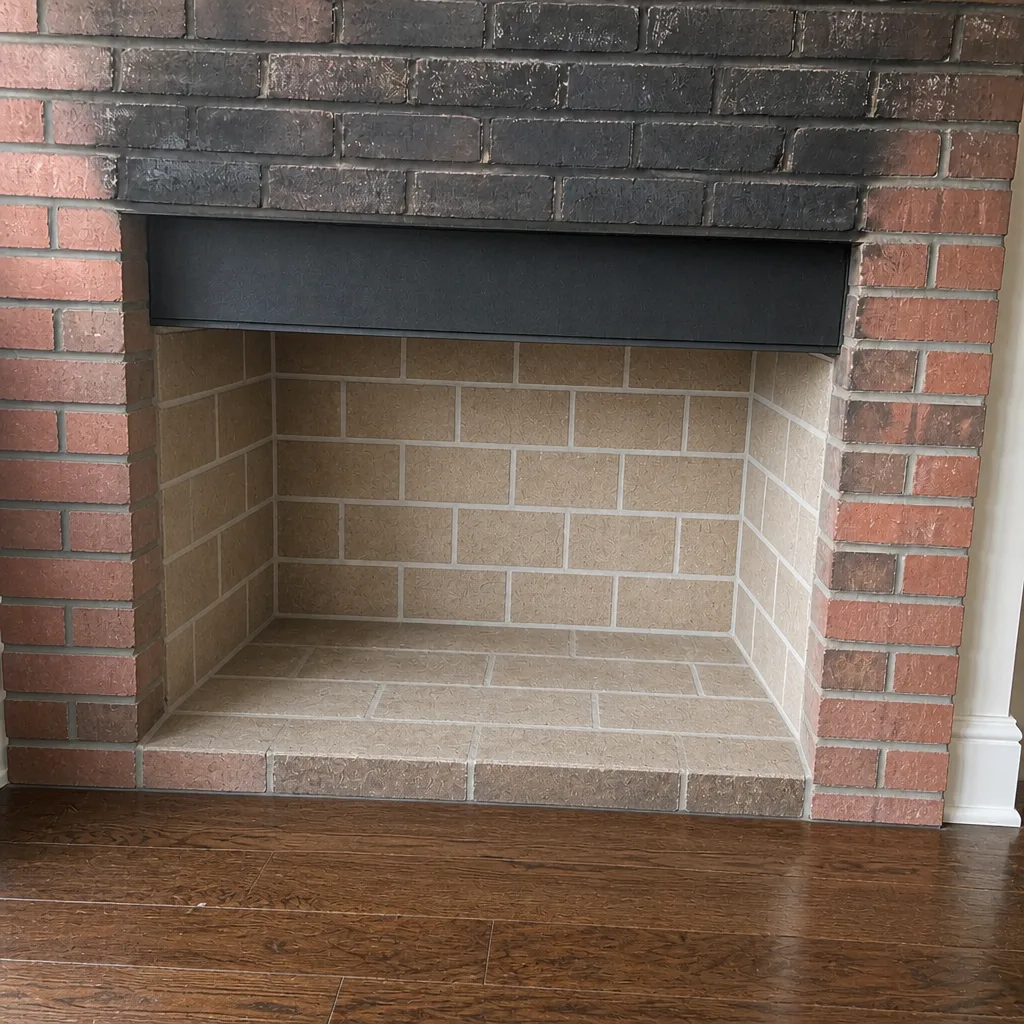
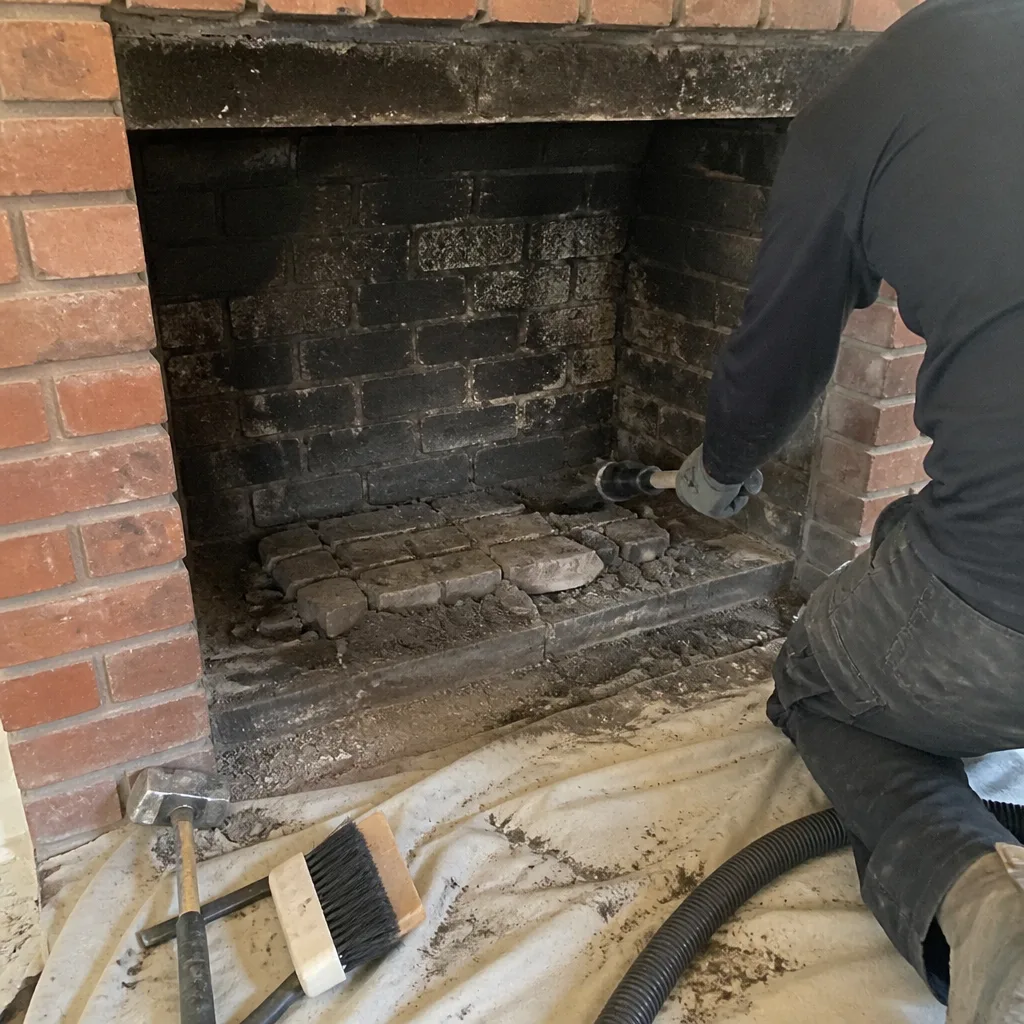
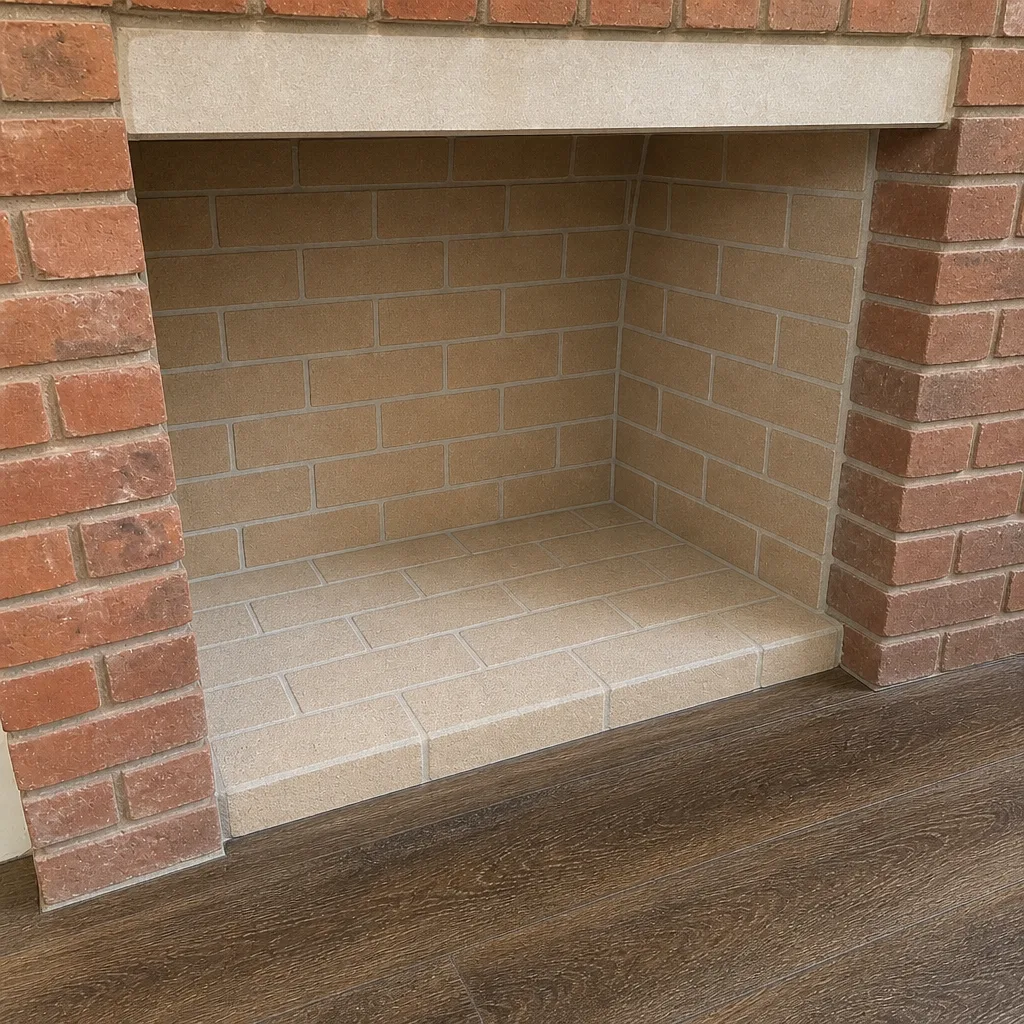
See the difference
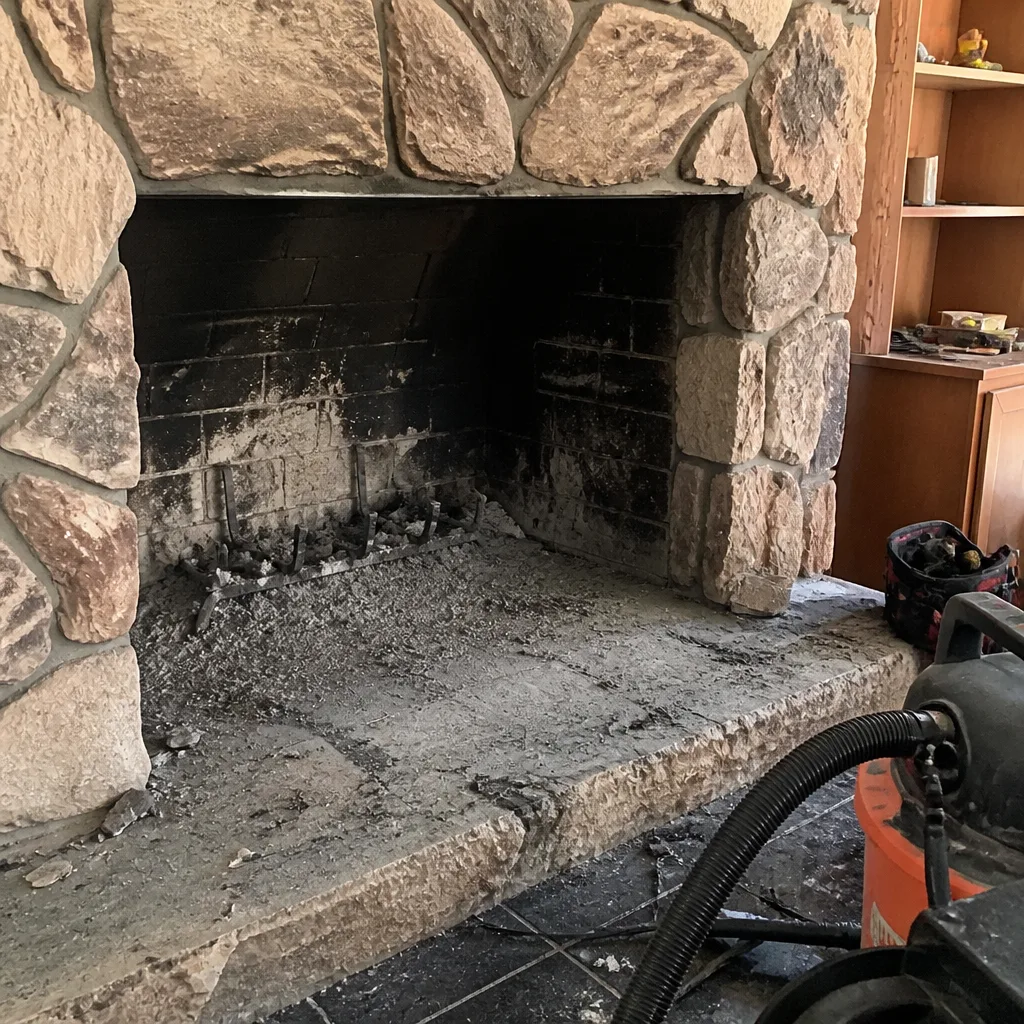 Before
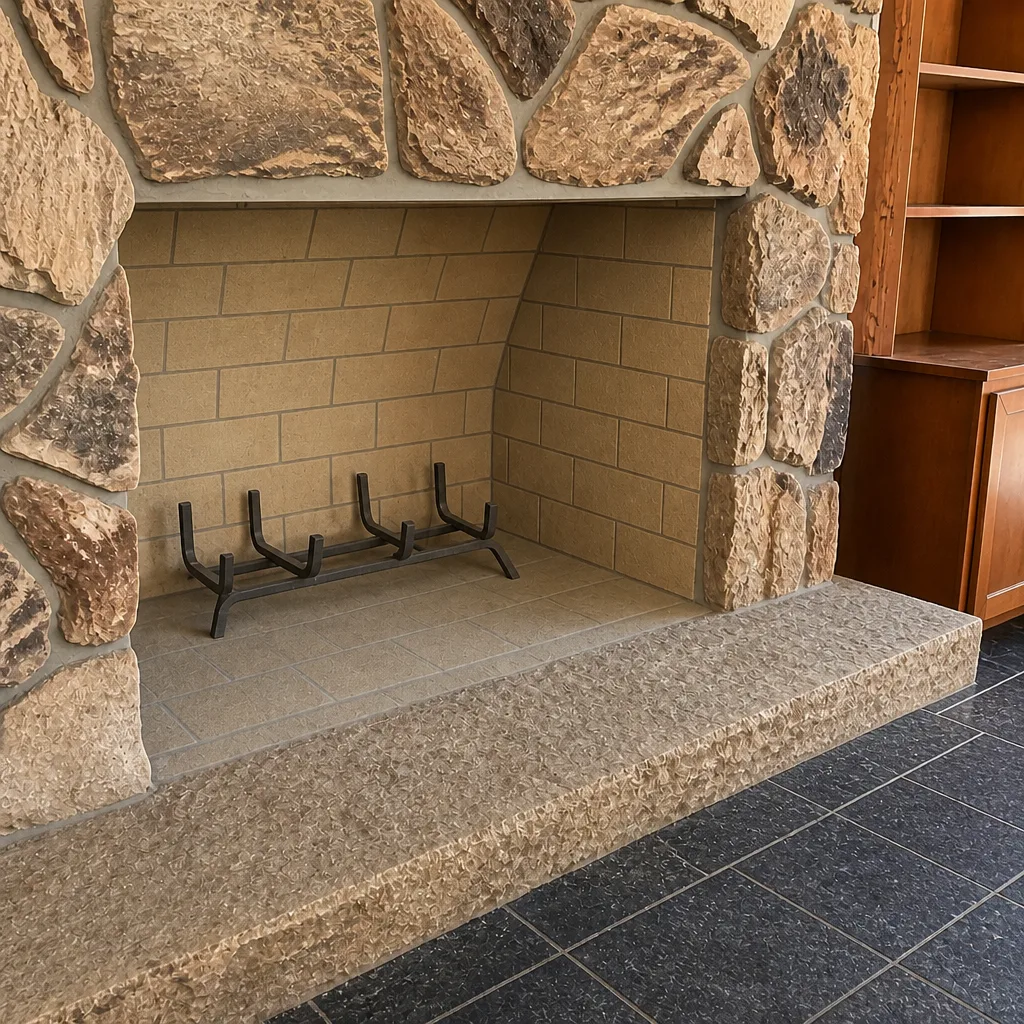 After
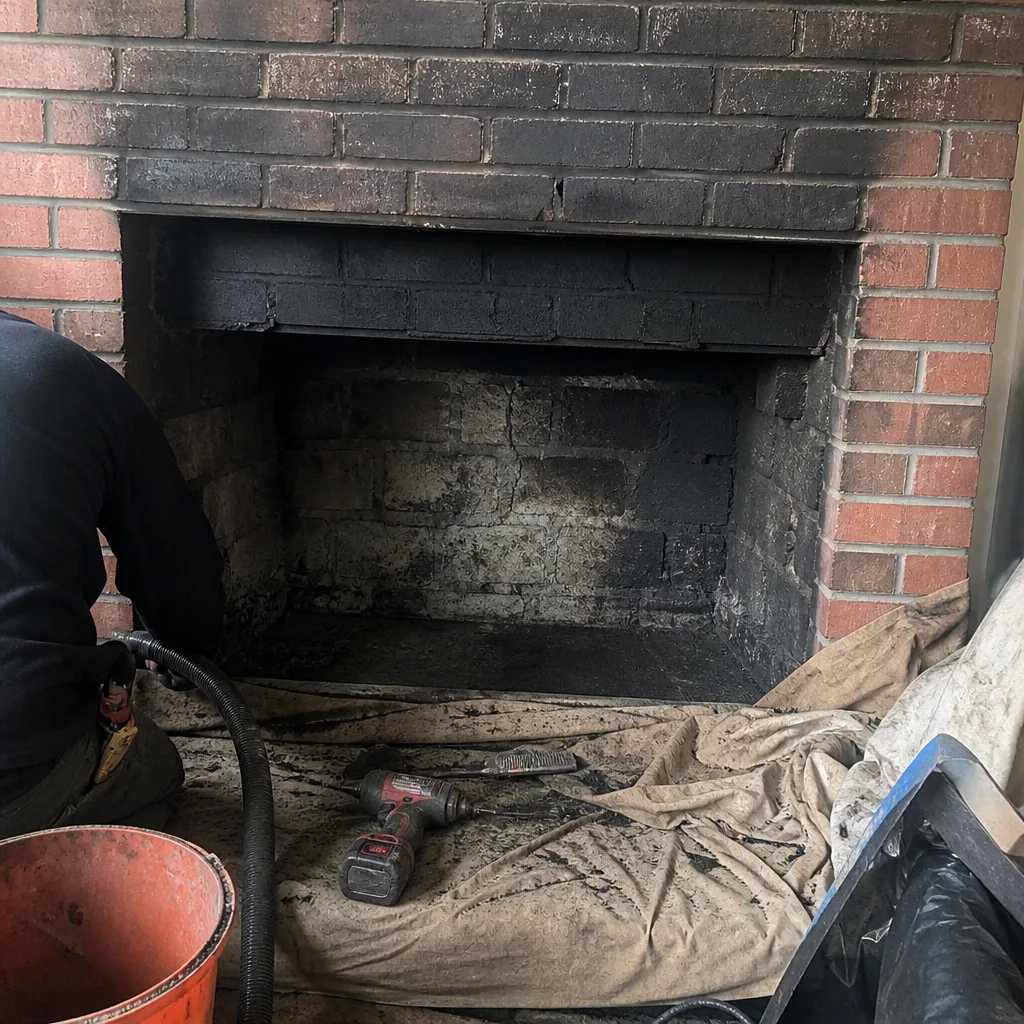 Before
 After
 Before
 After
When to Call a Professional
Some maintenance is reasonable to handle yourself: reading a label on a manufactured log, checking that the damper moves, clearing combustibles from around the hearth. But a specific list of situations needs a trained professional, and we want to be direct about them.
Call a professional if you see cracked or glazed creosote on the flue walls, missing mortar in the firebox, brick faces spalling, a cracked crown, a rusted-through cap, or a liner with visible gaps or joints that have opened up. Call if smoke rolls back into the room when you light a fire, if you smell gas near a gas insert, or if the firebox feels hotter than usual on the outside surfaces. Call before the first fire if you can’t remember the last time the chimney was inspected. High-tension components, gas venting and deteriorating masonry are not areas for a homeowner to experiment with. Technicians are trained and equipped to work safely on all three.
Chimney Sweep Antioch offers free estimates in Antioch – call (844) 352-4625. Our technicians have up to 15 years of experience, and we work with the same professional-grade brands full-service contractors specify – DuraFlex, HeatShield, Gelco, Olympia Chimney, Famco and Copperfield – so the parts going into your chimney are known quantities, not whatever ships cheapest.
Frequently Asked Questions
At least once a year, ideally in late summer or early fall before the first fire, plus a mid-season check if you burn wood heavily. For most Antioch homes that means a September sweep and inspection, a January camera check, and a May look at the exterior. Gas inserts still get an annual flue inspection even though they produce no visible creosote. Call (844) 352-4625 for an exact quote – estimates are free.
Yes. A sweep cleans the flue; an inspection tells you what condition it’s in. They’re different services with different purposes. A sweep without inspection is guesswork, because a clean flue is not automatically a safe flue. The inspection is where liner gaps, crown cracks and joint deterioration get found, and a camera inspection with a photo report is the format you want.
Every gas insert needs an annual flue inspection, even when there’s no visible soot or creosote. Gas appliances produce combustion byproducts that have to vent out of the house, and blocked vents are a carbon monoxide risk. If you haven’t had your gas insert’s vent inspected in the last year, that’s the service to book. Call (844) 352-4625 for an appointment.
September is the sweet spot – before the burn season, after the summer heat has had time to dry things out. Booking in June or July is even easier on scheduling. October through December is the busiest stretch for every chimney professional in Antioch, so the same sweep booked in October takes longer to get on the calendar. Call (844) 352-4625 to lock in a September slot.
Yes, and for a heavy wood burner it often should be. If the January camera check shows heavy or glazed creosote, a mid-season sweep is the right move before you burn another two months. Severely glazed creosote may need a chemical or rotary sweep rather than a standard brush clean. Call (844) 352-4625 for an assessment and free estimate.
A rusted-through or missing mesh cap needs to be replaced, not left in place. The cap is what keeps sparks off the roof, keeps animals and debris out of the flue, and keeps wind-driven rain from reaching the crown and liner. When the mesh corrodes through, all three protections fail at once. Call (844) 352-4625 for a free estimate on a replacement cap suited to your flue.
The Bottom Line
An annual sweep is the floor. A real maintenance schedule has four touchpoints through the year: a September pre-season check, a January mid-season creosote look, a May post-season moisture inspection, and an annual professional inspection with a camera and photo report. Gas inserts and wood-burning fireplaces follow slightly different schedules but neither gets to skip the annual inspection. The cap and crown belong in the schedule too, because they protect everything below them. Around Antioch, the burn season runs from roughly October to April, and the spring months are when moisture damage is most readable and most repairable.
Most of that schedule a homeowner can monitor. The inspection and repair side needs a trained professional, and the work has to be tied together by one accountable company – which is what we do. If you want a chimney schedule built around your specific system, call (844) 352-4625 for a free estimate. We answer 24/7. Fast dispatch, 7am-7pm, Sunday through Friday.
Written by the team at Chimney Sweep Antioch.